
You noticed a bulge, felt a pull when you lifted something, or were told by a doctor that you have a hernia. Then came the next question: will the repair involve mesh? Between online stories and unfamiliar terms, it is easy to feel uneasy. Understanding why mesh is used, and what it can and cannot do, helps you have a clearer conversation with your surgeon.
What a hernia is
A hernia happens when tissue, often part of the intestine or fat, pushes through a weak spot in the muscle or connective tissue of the abdominal wall. Common types include inguinal (groin), umbilical (belly button), femoral, hiatal and incisional hernias, the last of which develop at the site of a prior surgical cut. Hernias can affect men and women of many ages. Risk rises with straining, chronic cough, pregnancy, obesity, heavy lifting, prior abdominal surgery and the natural weakening of tissue with age.
A hernia does not heal on its own. Some people have few symptoms, while others have pain, pressure or a visible bulge. Sudden severe pain, vomiting, or a bulge that becomes firm, dark or cannot be pushed back needs emergency care.
What surgical mesh is
Surgical mesh is a sheet of medical-grade material placed over or behind the weak area to reinforce it. Most hernia meshes are made from synthetic polymers such as polypropylene or polyester. Some are made from biologic material derived from animal or human tissue. Mesh can be lightweight or heavier, and it comes in different pore sizes and shapes. Your body grows its own tissue into the mesh over time, which adds lasting strength to the repair.
Why surgeons use mesh
Before mesh became common, many hernias were repaired by stitching the edges of the weakened tissue together. The trouble is that those stitches pull the tissue tight, creating tension. Tissue under tension can tear or separate, and the hernia can come back.
Mesh spreads the load across a wider area rather than concentrating it on a line of sutures. This is the main reason it is used: it lowers the chance that the hernia will return. It also often allows a repair with less tension, which may make the operation more comfortable in the early recovery period.
Mesh spreads the load across a wider area rather than concentrating it on a line of sutures.
What the research shows
Multiple clinical studies and reviews have compared mesh repair with suture-only repair. For groin hernias and for many ventral hernias, including incisional ones, mesh repair has been associated with lower recurrence rates. Because of this, major surgical guidelines generally favor mesh for most adult groin hernias and for many abdominal wall hernias beyond very small ones.
Mesh is not risk free. Possible problems include infection, a collection of fluid near the repair, chronic pain, mesh shifting or shrinking, and, rarely, injury to nearby organs. Certain mesh products have been recalled over the years, which is part of why public concern exists. For some patients, such as small hernias in young patients, certain contaminated surgical fields, or specific circumstances, a surgeon may recommend a tissue repair or a different material. The best choice depends on the hernia, your health and your goals.
Open, laparoscopic and robotic approaches
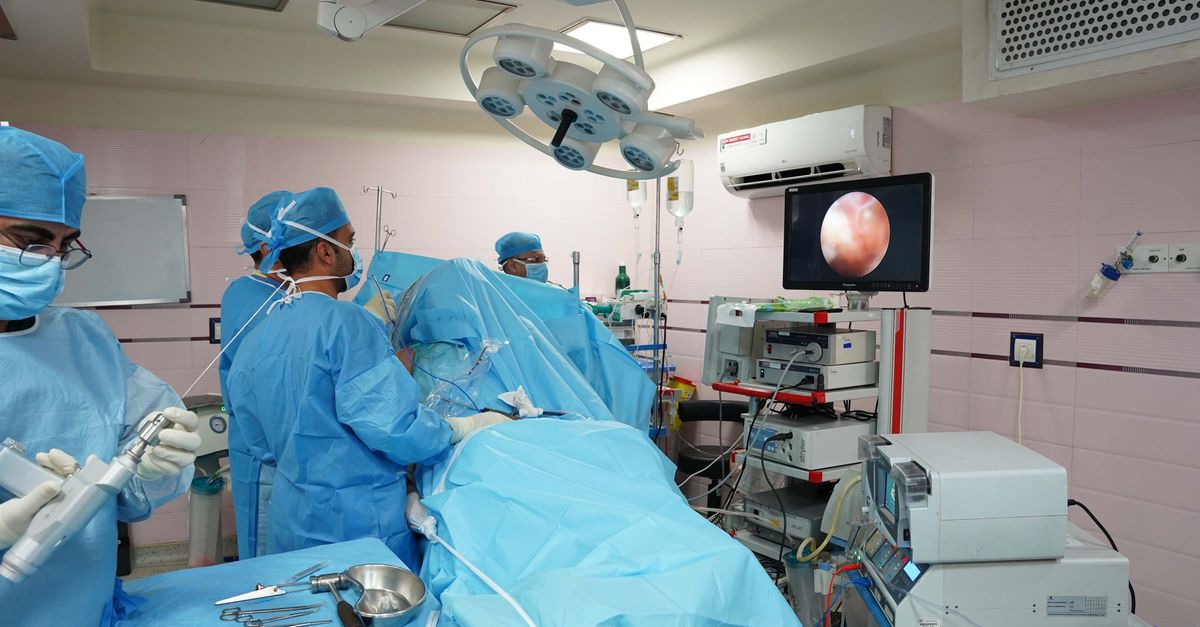
Mesh can be placed through a traditional open incision or through small incisions using a camera and instruments, in laparoscopic or robotic-assisted techniques. Each approach has strengths. Your surgeon will weigh the size and location of the hernia, whether it has been repaired before, your overall health and the type of anesthesia that is appropriate.
Questions to ask before surgery
- Ask which type of repair is being recommended for your hernia and why.
- Ask what kind of mesh would be used and where it would be placed.
- Share your full history, including prior surgeries, infections, allergies and any past reaction to implants.
- Tell your surgeon about smoking, diabetes, and any medicines you take, since these affect healing.
- Ask what recovery looks like and which symptoms mean you should call right away.
Take the next step
If you think you have a hernia, or you have questions about mesh, getting an exam is the best way to learn your options. Reaching out to the practice of Aldo Gamarra, MD in Lancaster, CA can start that conversation. You can call (661) 579-6088 or visit 1658 West Ave J., Lancaster, CA 93534.